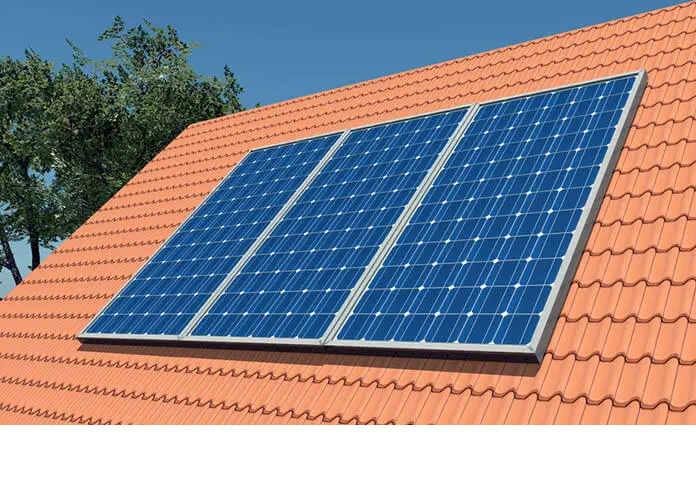
PLUG-IN SOLAR SYSTEMS FOR REDUCING THE COST OF ELECTRICITY FOR THE HOUSE, OR APARTMENT.
Plug‑in solar has exploded in 2026 due to rising electricity rates and new consumer‑grade microinverter kits. Search interest in “plug‑in solar panels for home” grew 700% year‑over‑year, and Europe already has over 6,000,000 systems installed.
This shows the technology is no longer experimental — it’s proven. And yes, the Country of Germany, has totally proven it with their millions of installations.
What is it!
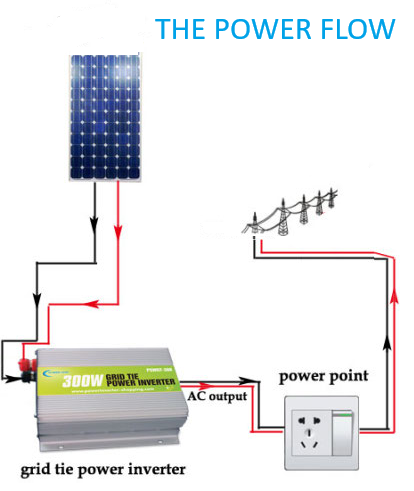
When you plug the system into any household outlet: The solar power flows backward into the branch circuit. Your home’s loads automatically consume the solar energy first. Whatever solar doesn’t cover is supplied by the grid. If solar exceeds your usage at that moment, the excess tries to flow back toward the main panel. This is called a load‑side connection, identical in principle to a professionally installed grid‑tie system.
CALIFORNIA LEGISLATURE
What has already happened...
SB 868 (Plug‑In / Balcony Solar Act) passed both houses of the California Legislature on August 25–26, 2026...
The bill allows up to 1,200 W of certified plug‑in solar panels to be connected to a standard 120‑V outlet with no utility interconnection approval required.
Systems must be UL‑certified and include anti‑backfeed safety and automatic shutdown during outages.
California’s Plug‑In Solar Rules (SB 868)SB 868 — the “Plug‑In / Balcony Solar Act” — allows up to 1,200 watts total of plug‑in solar per home without utility approval.
You CAN install multiple plug‑in units.
You can install:
2 × 600 W systems
3 × 400 W systems
4 × 300 W systems
Any combination, as long as the total is 1,200 W.
You CAN plug them into different outlets or circuits.
California does not restrict which circuits you use.
You can spread them across: Different rooms.
Different circuits.
Outdoor outlets.
Garage outlets.
This is allowed because each microinverter is UL‑certified and grid‑synchronized.
You DO NOT need permits, inspections, or utility interconnection. As long as: Total plug‑in solar 1,200 W.
Equipment is UL‑listed.
Microinverters have anti‑islanding.
You plug into a standard 120‑V outlet.
You are fully compliant.
What you CANNOT do under California regulations. Install more than 1,200 W of plug‑in solar, If you exceed 1,200 W. You must file a utility interconnection.
You could lose plug‑in exemption status.
You may violate electrical codes.
Backfeed of large amounts of power. Plug‑in systems are meant for self‑consumption, not exporting. Use non‑certified microinverters. Only UL‑1741 listed microinverters are legal.
ANY QUESTIONS, CONTACT US.
California has approved the program legislatively, but you cannot legally plug in a solar system yet.
If Newsom signs SB 868, you’ll be able to buy a 400–1200 W plug‑in kit and legally connect it to a standard outlet starting January 1, 2027. And if he does not sign it, it stills goes into effect, January 1, 2027
HOW DOES A PLUG IN SOLAR SYSTEM FOR A HOME WORK?
A plug‑in solar system works by quietly pushing solar electricity into your home’s wiring through a normal 120‑volt outlet.
It doesn’t run specific appliances, doesn’t isolate circuits, and doesn’t provide backup power. Instead, it simply reduces how much electricity your home pulls from the grid.Below is the clear, engineering‑style breakdown you prefer.
Innovative Solar Panel Solutions
1. Solar panel produces DC power:
The panel generates DC electricity based on sunlight intensity.
Typical plug‑in kits:
There is about 300–400 W per panel.
There is a total system size of 600–1200 W.
There is a UL‑listed microinverter attached to each panel.
2. Microinverter converts DC → AC and syncs with the grid.
The microinverter outputs 120‑V AC that is perfectly synchronized with your home’s grid power:
Matches grid voltage.
Matches grid frequency (60 Hz).
Includes anti‑islanding (shuts off instantly during outages).
Limits output to safe levels for a standard circuit.
This is the same technology used in rooftop solar — just scaled down.
3. You plug the microinverter into a standard outlet.
When you plug the system into any household outlet:
The solar power flows backward into the branch circuit.
Your home’s loads automatically consume the solar energy first.
Whatever solar doesn’t cover is supplied by the grid.
If solar exceeds your usage at that moment, the excess tries to flow back toward the main panel.
This is called a load‑side connection, identical in principle to a professionally installed grid‑tie system.
4. What actually happens inside your home’s electrical system.
Solar reduces your grid draw:
Example:
Solar output: 400 W
Home load: 900 W
Your home uses:
400 W from solar 500 W from the grid
Your meter slows down accordingly.
5. If Solar exceeds your load.
Example:
Solar: 400 W.
Load: 150 W.
The extra 250 W flows toward the main panel.
Whether it is allowed to backfeed depends on state law and utility rules.
No backup power.
If the grid goes down, the microinverter shuts off instantly.
Plug‑in solar cannot power your home during outages.
6. What plug‑in solar does not do:
Does not isolate circuits.
Does not run specific appliances directly.
Does not provide battery storage.
Does not provide backup power.
Does not replace a full solar installation.
It is simply a small grid‑tie system you plug in.
7. What plug‑in solar is good for:
Reducing daytime grid usage.
Offsetting a home’s monthly Utilities Bill.
Renters or homeowners who can’t install rooftop solar.
Small, low‑cost solar adoption.
A first economical step for the total system.
A plug‑in solar system is a miniature grid‑tie setup.
It pushes solar electricity into your home through a standard outlet, and your home automatically uses that solar power first. It’s safe, simple, and effective for small offsets — but it’s not a whole‑home solution.
WHY A PLUG-IN HOME SOLAR SYSTEM?
Yes — It is now fully recommended for a plug‑in solar system for you, and here’s exactly why.
Based on current 2026 plug‑in solar market data and how these systems perform for homeowners, plug‑in solar is now a legitimate, cost‑effective, low‑effort way to cut your electric bill.
The evidence from 2026 reviews and buyer guides shows that plug‑in systems have matured, prices have dropped, and reliability has improved significantly. The following information should help your decision making.
Just another tidbit....The Country of Germany, was the real pioneer of PLUG-IN SOLAR SYSTEMS FOR "HOMES". They started the process over 5 years ago, today, about 15% of their 42 million "homes", use PLUG-IN SOLAR SYSTEMS. "A penny saved, is a penny earned".
1. When a plug‑in system is worth the effort.
You want a very low‑cost way to cut your bill 15%–40%?
A 400–1200 W plug‑in system typically offsets 20–60 kWh/month in a sunny area like the Coachella Valley.
At $0.30/kWh summer rates, that’s $6–$18/month savings.
You want something simple with no electrician.
Plug‑in systems.
No excess roof work. Normally 3 Solar panels installed, instead of......
No permits (once CA SB 868 becomes active Jan 2027).
No utility interconnection.
No inspections.
No installer markup.
You literally mount the panel, plug it in, and you’re done.
You want a “starter solar” system.
Great for:
Testing solar before committing to a full system.
Offsetting daytime loads (pool pump, fridge, AC standby, electronics).
Renters or people who can’t install rooftop solar.
You want fast payback.
Typical plug‑in kits cost:$900–$1,400 for 1200 W, plus certified labor.
Payback in the Coachella Valley sun: Normally within 2 years.
2. When a plug‑in system is not worth it.
You want large savings, BOTTOM LINE.
Even a 1200 W system only offsets ~60–90 kWh/month.
If your bill is $200–$400/month, plug‑in solar won’t make a huge dent.
You want backup power.
Plug‑in solar shuts off during outages.
No batteries, no emergency power.
You want whole‑home solar performance.
Plug‑in systems:
Don’t export large amounts of power.
Don’t qualify for NEM credits.
Don’t reduce demand charges.
Don’t integrate with home energy management systems.
You have shaded areas or poor mounting options.
Plug‑in solar only makes sense if you have:
A south‑facing wall.
A sunny patio.
A fence or pergola with full sun.
A yard with unobstructed exposure.
3. For your property in the Coachella Valley.
You live in one of the best solar zones in the U.S.
Average peak sun hours: 6.5–7.0 hours/day
That’s elite.
A 1200 W plug‑in system would produce roughly:
1.2 kW×6.8 h/day≈8.1 kWh/day or Monthly:
8.1×30≈240 kWh/month
That’s meaningful.
If your daytime loads are high (pool pump, AC, fridge, electronics), you’d consume nearly all of that directly.
Savings at $0.30/kWh:
240×0.30=$72/month
That’s $864/year, which makes a $1,200 system pay back in ~1.5 years — extremely good.
This is why plug‑in solar is unusually attractive in the Coachella Valley.
4. Bottom line, It's worth it, if you want:
Less expensive solar costs
Fast payback
Simple installation
Daytime load offset
No permits or utility paperwork
Not worth it, if you want:
Whole‑home solar
Backup power for the House
Large bill reduction
Integrated battery systems
5. Safety and code behavior.
Plug‑in systems rely on:
UL‑listed microinverters.
Anti‑islanding.
Ground‑fault protection.
Overcurrent protection from the branch circuit.
A dedicated outlet is recommended for systems above ~600 W.
They are electrically safe when certified equipment is used.
The new State of California Regulation, SB 868 (Plug‑In / Balcony Solar Act), EFFECTIVE JANUARY 1, 2027, requires the following type components for use under their regulations, For the State of California.
1. Solar Panels (PV Modules)
These generate DC electricity from sunlight.
Most California plug‑in kits use monocrystalline 400–800 W panels, often bifacial for extra rear‑side gain.
This is the core of the system — no panel, no power.
Modern kits use Mono PERC or TOPCon panels for higher efficiency.
2. Microinverter (UL‑1741 Certified).
This is the most important safety component.
It converts the panel’s DC into 120‑V AC that your home can use.
California requires UL‑1741 certification because it ensures:
Anti‑islanding (automatic shutdown during outages).
Proper grid synchronization.
Safe plug‑in operation
Most kits include a microinverter already attached or bundled.
3. Mounting Hardware:
This holds the panel securely and at the correct angle.
Types include:
Balcony railing clamps.
Ground stakes.
Tilt brackets.
Wall mounts
Correct mounting dramatically improves output because angle and orientation matter.
4. AC Output Cable + Standard Plug (NEMA 5‑15).
This cable runs from the microinverter to your wall outlet.
In the U.S., plug‑in kits use a standard 3‑prong household plug.
Cable length is typically 5–10 ft.
This is literally how solar power enters your home’s wiring.
5. Monitoring App / Gateway (Optional but Common).
Many 2026 kits include Bluetooth or Wi‑Fi monitoring so you can see real‑time production.
Not required by law, but extremely useful.
6. Optional Battery / Storage Unit.
Some plug‑in systems include or support add‑on batteries.
Batteries store excess solar instead of letting it go unused.
They are optional — not required for California compliance.
7. Optional Accessories.
Depending on your installation: MC4 extension cables.
Outdoor‑rated AC extension.
Additional mounting brackets
These are situational, not required.
California‑Specific Requirements:
California plug‑in solar systems must comply with: UL‑1741 microinverter certification (mandatory).
Anti‑islanding safety.
Maximum 1,200 W total plug‑in capacity (SB 868 limit).
Standard 120‑V outlet connection
These requirements align with the components listed above.
Summary: What’s in a California‑legal plug‑in solar kit?
Required:
Solar panels.
Microinverter (UL‑1741).
Mounting hardware.
AC cable + NEMA plug.
Optional:
Battery.
Monitoring app.
Extra cables.
Additional mounts.
SCENARIO: Plug-In Grid-Tied (No Battery)
If you purchased a plug-and-play kit that plugs directly into a backyard wall outlet, it feeds up to 1200 Watts of live power into your home's breaker panel dynamically during the day.
Instead of choosing specific items to plug into it, it silently offsets whatever your home happens to be running at that exact moment. A 1200W live feed completely "erases" the energy usage of:
...An active 8,000 BTU window air conditioner.
...OR Three full-sized refrigerators running their compressors at once.
...OR A complete home entertainment system + every single light bulb in your house.
What a 1200W Kit Cannot Power:
A 1200W system does not generate enough volume or high-voltage amperage to run heavy 240V appliances or massive whole-home climate control systems. You must keep the system isolated from:
...Central Air Conditioning
...Electric Clothes Dryers
...Electric Water Heaters or Water Pumps
...Electric Ovens and Stoves
Using a 1200W plug-in solar kit without a battery is a great, cost-effective way to trim your power bill. Because there is no battery storage, this setup operates on a "use it or lose it" principle. Every watt generated by the sun flows through your wall outlet and must be consumed immediately by your house, or it goes to waste.
How It Cuts Your Bill (The Math, as an example):
A 1200W solar kit will generate roughly 5 to 6 kWh of electricity per day during peak sunny hours.
High-Rate Savings: If you live in an area with high electricity rates like California, New York, or Connecticut (averaging around $0.30 per kWh), the exact same panel setup will save you $1.50 to $1.80 per day ($45 to $54 per month).
Over the course of a full year, you can reasonably expect to shave $250 to $600 off your total power bill, depending on how sunny your region is and what you pay for electricity.
Best Strategy: Shift Your Heavy Loads to Midday.
Since you don't have a battery to store the daytime sun for evening use, the key to maximizing your return on investment (ROI) is lifestyle shifting. You want to run your most demanding household appliances during peak sunlight hours (typically 10:00 AM to 3:00 PM) to ensure the free solar energy handles the work instead of the grid:
Laundry & Dishwashing: Program or manually start your washing machine, clothes dryer, and dishwasher to run at noon.
Pre-Cooling Your Home: Run your central or window air conditioner a few degrees cooler during the afternoon while the panels are pushing peak power, then let it coast into the evening.
Pool Pumps & EV Charging: If you have a pool filtration pump or an electric vehicle, set their timers to run exclusively during the middle of the day.
Two Critical Limitations to Keep in Mind:
Beware of "Back-Feeding" the Grid: If your house is completely empty during the day and only drawing 300 Watts of baseline power, but your panels are creating 1,200 Watts, the extra 900 Watts will push backward out into the city power grid. Depending on your utility company, a traditional digital meter might mistakenly read this outgoing power as consumption and actually charge you for the electricity you gave away.
The Fix: Many premium plug-in kits, like a STANDARD 1200W Plug-In Kit, offer an optional "Zero-Export Gateway". This smart sensor clips inside your electrical panel and dynamically throttles the solar panels down to match your exact home load so you never back-feed the grid.
No Power During Blackouts: Grid-tied plug-in solar kits feature built-in "anti-islanding" protection. For the safety of utility workers, if the neighborhood power grid goes down, your plug-in solar kit will instantly turn itself off within milliseconds—even if it is a perfectly sunny day. Without a battery, you cannot use this system as emergency backup power.
This system is not "Brain Surgery". Just understand what it can do, or can't do. When it is on, either use the "power" generated by the solar panels, or you will lose it. It's that simple. What ever questions you may have, please contact us for help.
MAX SOLAR SYSTEMS COMPANY
TELEPHONE: 760-269-5671
EMAIL: MAXSOLAR@GMAIL.COM
OFFICE: BERMUDA DUNES
MAX SOLAR SYSTEMS COMPANY IS A
DIVISION OF WILCOX ENTERPRISES,
A GENERAL CONTACTOR IN CALIFORNIA
SINCE 1996.
PROJECTED COSTS OF A SYSTEM.
Item--------------------Low----------Average----------High
Notes:
400W Panel(s) (single panel or series)$
Assumes standard crystalline panel; higher efficiency raises cost.
Inverter (DC to AC).$
String inverter typical; microinverters add cost.
Racking & Mounting.$
Roof type and tilt affect price.$
Wiring & Electrical Hardware.$
Includes disconnects, conduit, and backfeeds.$
Labor & Installation.$
Includes permitting and inspection time.$
Permits & Inspection.$
Local rules vary by jurisdiction, Delivery & Disposal.$
Depends on distance and haul restrictions.$
Warranty & Service.$
Panel and inverter warranties are separate.$
Taxes & Fees.$
Varies by state and local taxes.
RATIONALE FOR PURCHASING THE PLUG-IN SOLAR SYSTEM.
A plug‑in solar system saves you money by directly reducing the amount of electricity your home pulls from the grid during the daytime. It doesn’t sell power back, it doesn’t use net‑metering — it simply replaces part of your daytime consumption with solar. That’s it.
And in a high‑sun, high‑rate area like Palm Desert, for example, for excellent, that simple mechanism is surprisingly powerful. Below is the engineering‑grade breakdown you prefer.
1. What a plug‑in system actually does (the real mechanism). When the microinverter pushes 120V AC into your home through a standard outlet, your house automatically consumes that solar energy first, before pulling from the grid. This is called self‑consumption offset.
Example: Your home is using 1,500 W at noon (AC, fridge, pool pump, electronics).Your plug‑in system produces 1,200 W. Your home now pulls only:
1500−1200=300 W from the grid.
You pay for 300 W, not 1500 W.
That’s the entire money‑saving mechanism.
No net‑metering.
No utility paperwork.
No export credits.
Just less grid usage.
2. How this translates into actual savings In Palm Desert, for example, daytime electricity is expensive:
$0.28–$0.32/kWh typical summer rate
6.0–7.0 peak sun hours/day average
A 1200‑W plug‑in system produces:
1.2 kW×6.5 h/day=7.8 kWh/day-Monthly:
7.8×30=234 kWh/month-Savings:
234×0.30=$70.20 per month
Annual:
$70.20×12=$842 per year If your system cost $1,200–$1,500, your payback is, 1.8 years.
That’s insanely good — and it’s because your location is one of the best solar zones in the U.S.
3. Why plug‑in solar works without net‑metering.
Because the microinverter is UL‑1741 certified, it syncs with your home’s AC waveform and simply reduces the load on the grid.
Your meter spins slower.
Your bill drops.
No export.
No credits.
No utility involvement. It’s the simplest form of solar.
4. Why plug‑in solar works especially well for YOU. Your property in Palm Desert, for example, has: High daytime loads (AC + pool pump), and.....
High electricity rates
Huge sun exposure
Outdoor GFCI outlets
Space for 3–4 panels
No shading
No HOA restrictions
Plug‑in solar is literally designed for this environment.
5. What plug‑in solar does not do. To be clear:
It does not power your home during outages
It does not export power
It does not eliminate your bill
It does not replace whole‑home solar
It is a partial offset system — but a very effective one in high‑sun regions.
Bottom line:
A plug‑in solar system saves money by:
Reducing your daytime grid usage
Offsetting your most expensive kWh
Running your AC, pool pump, fridge, and electronics on solar
Cutting 200–250 kWh/month from your bill
Paying for itself in ~2 years in Palm Desert
It’s simple, cheap, and surprisingly effective.
STANDARD PLUG IN SOLAR SYSTEM.
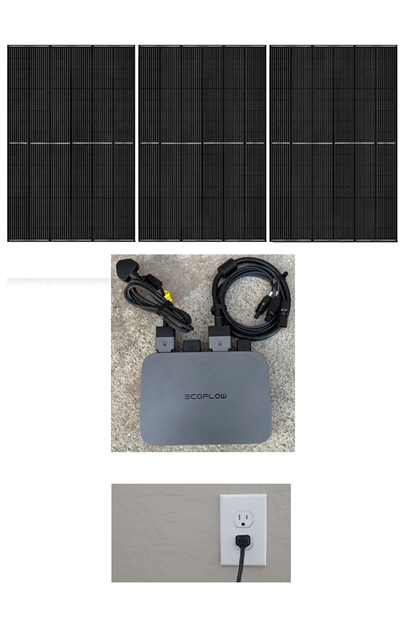
3-400 W PANELS
STANDARD MICRO-INVERTER WITH
WIRES AND CABLE
STANDARD WALL CONNECTION